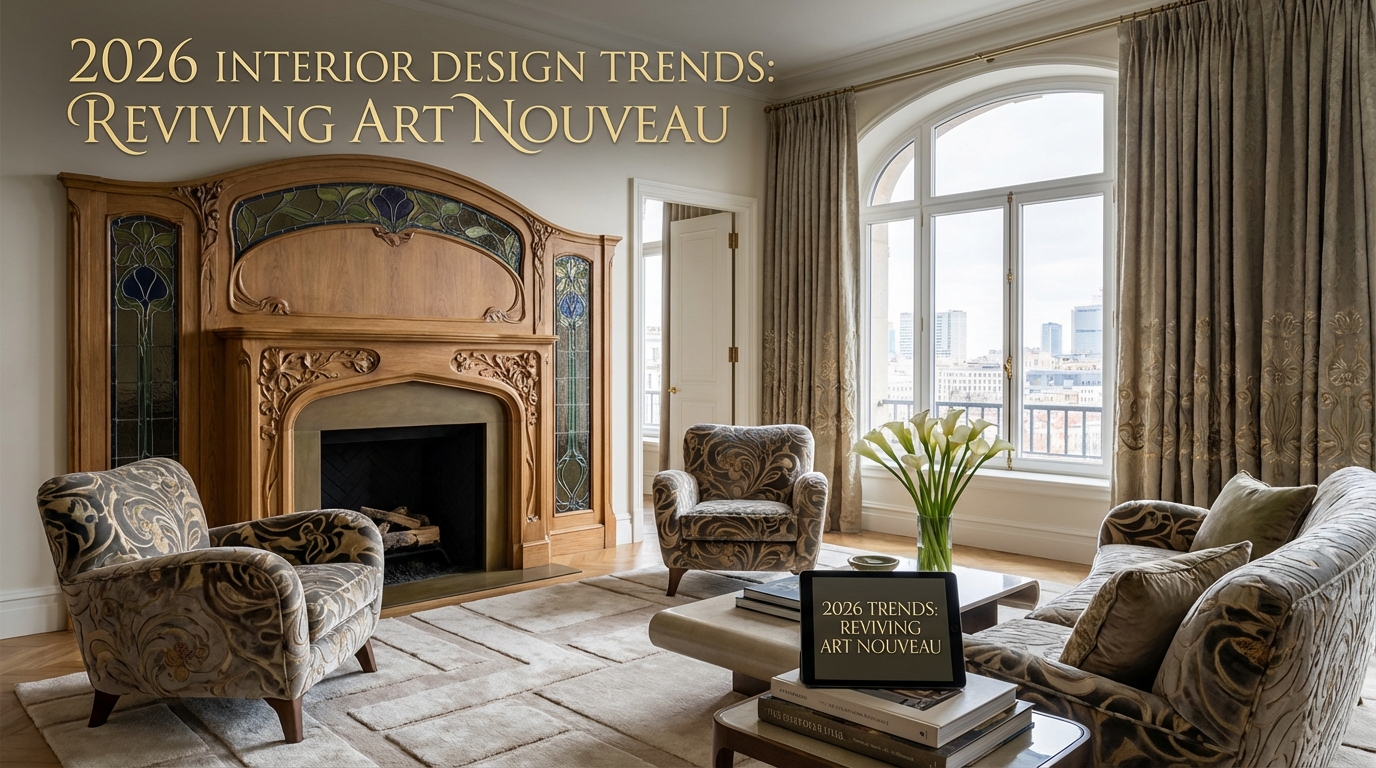
2026 Interior Design Trends: Reviving Art Nouveau
2026 Interior Design Trends: Reviving Art Nouveau Glamour
- Maximalism is the New Standard: 2026 marks a decisive shift away from quiet luxury and minimalism toward "Fearless Design" and Maximalism, inspired by the opulent, curvilinear spirit of Art Nouveau and Neo-Deco.
- Saturated Palettes & Sumptuous Textures: The trend demands rich, saturated color palettes (jewel tones, deep earth hues) paired with sumptuous textiles like velvet and silk, emphasizing soulful textures and traditional craftsmanship (e.g., hand-dyed fabrics).
- Art-Led Interiors: Home design is becoming a curated gallery, focusing on Neo-Collectible Design and gallery-worthy furniture that acts as sculpture, contributing to a highly personalized, deeply layered look.
- Key Stylistic Elements: Top designers advocate for creating intimate, dramatic spaces known as Jewel Box Nooks and integrating elements of Mediterranean warmth through natural materials and sunbaked hues.
Table of Contents
- The Collected Look: Sumptuous Textiles and Daring Approach
- The Collected Look: Why Maximalism and Fearless Design are Back
- Soulful Textures and Traditional Craftsmanship
- Art-Led Interiors and Gallery-Worthy Furniture
- Saturated Palettes: The Rise of Fearless Design
- Meticulous Execution: The Foundation of High-End Design
- The Designer’s Role in Unapologetic Design
- Tactile Fabrics and Soulful Textures
- Comparing Design Philosophies: From Restraint to Richness
- Frequently Asked Questions: Navigating the Neo-Deco Shift
The year 2026 marks a decisive turning point in the design landscape. We are collectively moving beyond the muted, quiet luxury aesthetic of recent years and embracing a more vibrant, collected look.
This powerful shift signals a return to fearless design and unapologetic glamour, drawing heavily from the decadent, curvilinear spirit of Art Nouveau. For Fusion Living Interior, this means creating bespoke spaces that are both historically informed and utterly contemporary.
This revival is far more than historical imitation; it requires integrating soulful textures and saturated color palettes into modern, functional living. Top designers are advocating for a layered look that feels deeply personal and richly detailed, making Maximalism the defining home design philosophy for the year.
The Collected Look: Sumptuous Textiles and Daring Approach
Experts like Summer Thornton and Martyn Lawrence Bullard have long championed this daring approach. They inspire us to create spaces that feel like 'jewel box nooks,' intimate areas brimming with tactile fabrics and gallery-worthy furniture.
The core of this trend involves moving away from flat finishes and embracing depth. Think sumptuous textiles, richly patterned upholstery, and colorful textiles that invite touch. This aesthetic demands saturated color palettes, often featuring deep emeralds, sapphire blues, and ruby reds.
This opulence pairs perfectly with the emerging trend of Mediterranean warmth, emphasizing traditional craft and a sense of enduring history. Designers such as Kathryn M. Ireland often utilize these hand-dyed textiles to achieve that authentic, soulful texture, bringing Mediterranean design principles into the forefront of the discipline.
This is not just decorating ideas; it is a philosophy. It is about creating environments that showcase unique, Neo-Collectible Design pieces, environments where every object tells a story. We see this commitment to expressive design in the work of figures like Mary McDonald and Jay Jeffers, who masterfully blend high art with everyday function.
Ready to explore how you can infuse your home design with this opulent new energy? Fusion Living Interior specializes in translating these high-end concepts into bespoke, functional spaces. We begin by examining the key pillars of this glamorous 2026 resurgence.
Related Video
Maximalist Interior Design Explained | Why This Bold Style is ...
The key to Maximalist design lies in three principles: layering, cohesion, and intentional boldness.
Watch Video on YouTube →
The Collected Look: Why Maximalism and Fearless Design are Back
The year 2026 signals a fundamental shift in interior design trends. We are collectively moving beyond the muted, quiet luxury aesthetic of recent years and embracing a more vibrant, collected style.
The focus is now squarely on expressive, personalized spaces, a movement often described as unapologetic design.
Top designers agree: the era of the sterile 'catalogue home' is officially over, replaced by the desire for a deeply layered look.
Publications like VERANDA have consistently championed this shift toward a truly collected look, celebrating individual style and memory through art and bespoke pieces.
This resurgence is Maximalism, but executed with a refined, expert touch, a balance we specialize in here at Fusion Living Interior.
The Art Nouveau Revival: Curves, Saturated Color Palettes, and Summer Thornton
This new wave of Maximalism draws heavily from historical movements that embrace curve and drama, notably Art Nouveau and Art Deco.
We are seeing the resurgence of sinuous lines, geometric shapes, fan arches, and glamorous materials, often incorporating saturated color palettes.
Designers like Summer Thornton, known for her vibrant, character-filled projects in Chicago, exemplify this confident, fearless design approach.
It is about creating a home design that tells a deeply personal story, utilizing sumptuous textiles and gallery-worthy furniture.
The goal is to move past safe decorating ideas and embrace a daring approach to color and texture.
The most memorable spaces are the ones that reflect genuine joy and confidence. Choosing items that resonate instead of defaulting to what feels “safe” leads to a layered home with character and longevity.
Related Innovation
Display apparatus, server and control method for applying transfer style to …
Disclosed is a display apparatus displays a first image selected based on a user input, obtains, from a server, a second image having a transfer style, the transfer style preferred by a user from among a plurality of transfer styles, and displays the second image.
Soulful Textures and Traditional Craftsmanship
Following the embrace of 'unapologetic design,' the pursuit of authenticity in home design leads us directly back to traditional craft and soulful textures.
Design trends 2026 emphasize quality over quantity. Homeowners are demanding gallery-worthy furniture and bespoke pieces that feel grounded and artisanal, rejecting mass-produced uniformity.
This commitment to depth requires integrating raw, tactile materials, from heavily grained wood and stone to raw plaster finishes and sculpted natural materials.
There is a renewed appreciation for processes like hand-dyed textiles, ensuring every element contributes uniquely to the overall collected look and the move toward Neo-Collectible Design.
The Allure of Sumptuous Textiles and Pattern
Textiles are no longer passive background elements; they are central to the overall interior design narrative. This shift allows for a truly fearless design approach.
We anticipate a spike in the use of richly patterned and colorful textiles, moving away from neutral, monochromatic schemes toward saturated color palettes.
Top designers who have long championed the power of pattern mixing are setting the tone. Masters of the layered look, such as Kathryn M. Ireland and Martyn Lawrence Bullard, demonstrate how to weave global, artisanal fabrics into cohesive, luxurious spaces.
You can create a vibrant, collected look by combining antique rugs, silk velvets, and complex, layered drapery, transforming simple areas into rich jewel box nooks.
The goal is depth, warmth, and visual interest, often incorporating Mediterranean warmth through natural fibers, sunbaked hues, and the vibrant tilework reminiscent of Seville.
Key Textile Elements Defining 2026 Interior Design Trends
-
- Fringe and Tassels: Old-world trimmings are back, adding sophisticated movement and texture to upholstery and drapery.
-
- Velvet: A foundational element for luxury, especially in deep, saturated color palettes like jewel tones, perfect for creating a cozy cocktail nook.
-
- Bespoke Upholstery: Investing in high-quality, tactile fabrics for longevity and comfort is paramount, reflecting the commitment to lasting, traditional craft.
Related Video
Mixing Patterns Like a Designer: One Easy Tactic
In this video, I'll walk you through all the classic fabric patterns used in interior design. ... The Ultimate Guide To Mixing Patterns In Your ...
Watch Video on YouTube →
Art-Led Interiors and Gallery-Worthy Furniture
The previous emphasis on traditional craft demands that every piece of gallery-worthy furniture tells a story. In 2026, the home is treated not merely as a dwelling but as a curated gallery.
This focus on quality has fueled the rise of Neo-Collectible Design, unique items that deliberately blur the line between utility and sculpture.
Achieving this look requires a daring approach to selection, valuing originality and provenance over mass production.
This commitment to the collected look is a signature move among top designers specializing in bespoke spaces.
Sculptural Natural Materials and Neo-Collectible Design
We are seeing an embrace of pieces that feel organic yet highly refined, often utilizing Sculptural Natural Materials.
This trend moves beyond simple decoration, seeking items that possess a profound sense of materiality and form.
The work of designers like Chris Wolston, whose furniture often features whimsical, hand-crafted forms, perfectly captures this mood of functional artistry.
Publications like VERANDA frequently showcase these highly individualized spaces, demonstrating the power of unapologetic design when executed with precision.
The Influence of Masters in Interior Design Trends 2026
The influence of early 20th-century masters is palpable across interior design trends 2026, particularly in lighting and bespoke cabinetry.
The surrealist curves and forms championed by artists like Salvador Dali are finding their way into modern furniture design, adding unexpected drama.
The Fundació Gala-Salvador Dalí continues to inspire designers seeking inventive, unconventional shapes that elevate a room.
Photographer Thomas Loof captures the essence of these art-driven spaces beautifully, often featuring large-scale works that define the room's narrative.
Furthermore, incorporating actual fine art adds necessary depth. Pieces such as Robert Richter’s evocative ‘Garden of Eden’ series, featured by galleries like The David Barnett Gallery, enrich the space with narrative.
This is not merely decoration; it is about living within an intentional, artistic environment that truly defines your home design.
Expert Insight
"The era of passive luxury is over; 2026 interiors are sentient spaces where investment-grade furniture, fine art, and radical sustainability merge to narrate a personal legacy, creating an intentional, artistic environment that defines the home." , International Design Curator
Saturated Palettes: The Rise of Fearless Design
In 2026, the backdrop for your curated, gallery-worthy furniture must be as dramatic as the pieces themselves.
We are witnessing a decisive shift toward maximalism and embracing saturated color palettes. This daring approach is defining the new interior design trends 2026.
Moving far beyond safe neutrals, this fearless design provides the necessary depth and character to elevate bespoke interiors.
Expect rich, earthy tones paired unexpectedly with vibrant jewel hues, creating dramatic, high-contrast spaces that demand attention.
Jewel Box Nooks and the Layered Look
A key stylistic choice is the strategic creation of intimate, moody spaces, known as jewel box nooks.
These small, concentrated areas, like a dedicated reading corner or a sophisticated cocktail nook, allow for intense design drama and a collected look.
Top designers like Jay Jeffers masterfully employ deep wall colors and reflective surfaces to maximize impact in these smaller zones.
Furthermore, Mary McDonald frequently demonstrates how to use high-gloss finishes and rich color to achieve maximum glamour without relying on excessive clutter.
This layered look is often anchored by deep chocolate browns, which have emerged as the sophisticated new neutral for home design.
Mediterranean Warmth and Soulful Textures
Complementing the deep palettes is the growing desire for Mediterranean design elements, emphasizing warmth and connection to nature.
Designers like Summer Thornton embrace this style, which incorporates sun-drenched terracottas, warm wood tones, and textured plaster, creating a transportive feeling.
This approach focuses heavily on soulful textures and hand-dyed textiles, ensuring the interior feels inherently inviting and luxurious.
Huma Sulaiman expertly blends these global influences with luxurious materials, capturing the true essence of Mediterranean warmth through sumptuous textiles.
For a truly unapologetic design, consider integrating richly patterned tiles or tactile fabrics, channeling the elegant, old-world aesthetic championed by Kathryn M. Ireland.
Expert Insight
"Known as ‘heritage maximalism,’ this design style incorporates nods to British roots while layering in contemporary sensibility, to create a timeless, modern appeal." , Kiya Kelly-Paine, Houzz home design trends expert
Meticulous Execution: The Foundation of High-End Design
For Fusion Living Interior, achieving true elegance is inseparable from meticulous project execution.
The complexity inherent in these latest interior design trends 2026, especially the integration of custom millwork, detailed tilework, and integrated technology, demands expert management.
Our commitment is to deliver comprehensive, end-to-end service, ensuring the desired layered look is achieved flawlessly, every time.
Top designers like Karen Asprea consistently emphasize the structural integrity and precision required when implementing complex, high-end visions.
This unwavering commitment to detail is precisely what distinguishes a truly bespoke interior from standard home design.
The Designer’s Role in Unapologetic Design
Implementing fearless design and saturated color palettes requires a trusted partner to expertly guide you through bold choices, such as intricate tilework or custom lighting.
Experts such as Meridith Baer, known for her exceptional high-end staging and interior design, exemplify how to balance dramatic elements with functional livability.
We work closely with our clients, encouraging them to be bolder and embrace maximalism, a philosophy advocated by influential voices like Sarah Akbary.
This collaborative partnership ensures the final space fully reflects your unique personality while maintaining professional elegance and the highest standards of interior design.
Achieving the highly desired collected look requires careful layering, a skill often showcased in the work of Fern Santini, who blends new statement pieces with cherished antiques.
Tactile Fabrics and Soulful Textures
The success of the unapologetic design movement relies heavily on the quality and variety of materials used. It is not enough to choose a bold paint color; the tactile experience must match the visual drama.
We are seeing a return to sumptuous textiles, rich velvets, silks, and hand-dyed fabrics, that introduce necessary depth and luxury. This complexity requires precision installation, especially with richly patterned wall coverings.
Designers like Martyn Lawrence Bullard consistently demonstrate how blending globally inspired patterns and soulful textures elevates a room from merely decorated to truly transformative.
This attention to tactile fabrics is essential for realizing the full potential of these exciting design trends 2026.
Expert Insight
"Every maximalist interior begins with a 'trophy' piece: a fabric, wallpaper, or rug that commands attention and sets the tone for the room, acting as the muse for the entire layered, unapologetic story of the space." , Hollis Loudon, Interior Designer
Comparing Design Philosophies: From Restraint to Richness
To fully grasp the complexity and excitement surrounding the latest interior design trends 2026, it is essential to understand the magnitude of the aesthetic shift occurring right now.
For the past several years, the focus has been on reserved simplicity, a style often termed 'Quiet Luxury.' However, the emerging philosophy champions expressive richness, a daring approach that demands meticulous detailing from our team.
This movement, championed by influential voices like Martyn Lawrence Bullard and Summer Thornton, represents a powerful swing toward Maximalism and the highly detailed, collected look. If you are seeking truly individualized home design, 2026 offers the freedom for unapologetic design.
The following table illustrates how the core focus has moved from minimal texture to the integration of sumptuous textiles and a dramatically different approach to color.
| Design Element | Recent Years (Quiet Luxury/Minimalism) | 2026 Trend (Neo-Deco/Maximalism) |
|---|---|---|
| Color Palette | Monochromatic, Beige, Cool Neutrals | Saturated color palettes, Jewel Tones, Earthy Hues, Mediterranean warmth |
| Textiles | Linen, Minimal texture, Solid colors | Sumptuous textiles, Velvet, Silk, Richly patterned fabrics, Tactile fabrics |
| Furniture Style | Clean lines, Mid-century modern, Functional | Gallery-worthy furniture, Sculptural forms, Curves, Art-Led |
| Atmosphere | Restrained, Minimal, Quiet | Layered look, Collected look, Unapologetic design |
| Accent Metals | Matte Black, Brushed Steel | Brass, Chrome, High-Gloss Finishes |
Frequently Asked Questions: Navigating the Neo-Deco Shift
What defines the core shift in interior design trends for 2026?
The core shift in interior design trends 2026 is defined by a powerful move toward Maximalism and Fearless Design, often termed Neo-Deco. This aesthetic marks a deliberate departure from past restraint.
This daring approach champions expressive richness, embracing saturated color palettes, sumptuous textiles, and a highly personalized, collected look. Top designers like Summer Thornton and Martyn Lawrence Bullard are leading this movement toward unapologetic design.
How can I incorporate Art Nouveau elements without making my home feel dated?
The key is modern refinement and blending the style with contemporary luxury. Focus on the signature curves and organic forms of Art Nouveau in specific ways, rather than replicating the entire aesthetic.
Consider bespoke lighting fixtures, custom millwork, or a single piece of gallery-worthy furniture by artists like Chris Wolston. Use these forms as an elegant accent to achieve a sophisticated, soulful texture and elevate your home design with a historical nod toward traditional craft.
Are neutral colors completely out of style in 2026?
Absolutely not, neutrals are simply evolving. Instead of cool, stark whites or grays, interior design favors warmer neutrals, channeling a sense of Mediterranean warmth.
Think deep chocolate brown, taupe, and rich creams. These colors provide the necessary anchor for the vibrant saturated color palettes and richly patterned fabrics that define the essential layered look of 2026.
What is a Jewel Box Nook and how do I create one?
A Jewel Box Nook, or Cocktail Nook, is a small, highly decorated, and intimate space designed for maximum visual impact and enclosure. It allows for concentrated fearless design in a small area.
To create one, follow the lead of designers like Jay Jeffers: utilize high-gloss paint finishes, dramatic patterned wallpaper, deep jewel tones, and luxurious, tactile fabrics to create immediate opulence. This space should feel like a luxurious escape.
Which designers are setting the standard for the Collected Look?
The Collected Look is best exemplified by top designers who expertly blend periods, textures, and global origins. This technique requires meticulous editing to avoid clutter.
Key figures setting this standard include Kathryn M. Ireland, renowned for her stunning use of hand-dyed textiles and colorful textiles; Fern Santini, who masters the art of layering and proportion; and Meridith Baer, who excels at creating homes that feel immediately lived-in and deeply personal. Also watch the work of Huma Sulaiman for inspiration on incorporating international finds.
References
- The 7 Biggest Interior Design Trends for 2026, According to Designers
- Top Interior Design Trends for 2026 | What's In & What Will Last
- The 11 Key Interior Design Trends Set to Define 2026 | Vogue
- 7 Decorating Resolutions Designers Are Making for 2026
- Design Experts Reveal The Top Interiors Trends For 2026